



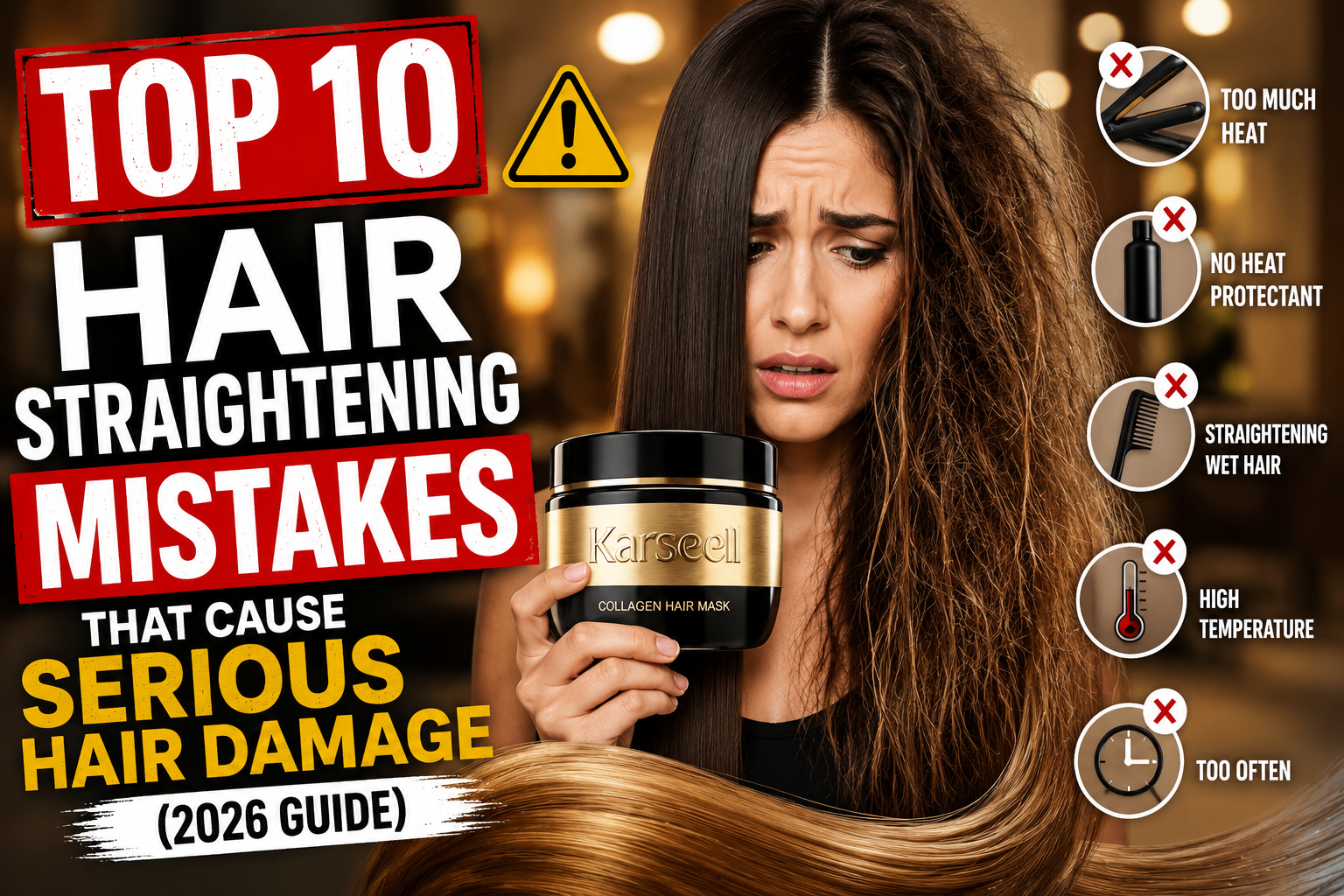
Hair straightening can make your hair look smooth, shiny, and polished. But using heat tools the wrong way can slowly destroy your hair health without you realizing it. Many people experience dryness, split ends, breakage, thinning, and dull hair because of common straightening mistakes.
The good news is that most heat damage can be prevented with the right routine.
In this 2026 guide, you’ll discover the biggest hair straightening mistakes, how they damage your hair, and the best ways to protect and repair your hair naturally. Whether you straighten your hair daily or occasionally, these expert tips can help you keep your hair healthier and stronger.
Why Hair Straightening Can Damage Hair
Hair straighteners use high temperatures to temporarily change the shape of your hair. Excessive heat weakens the hair cuticle, removes moisture, and breaks down natural proteins like keratin.
When this happens repeatedly, hair becomes:
- Dry
- Brittle
- Frizzy
- Weak
- Thin
- Split at the ends
The risk becomes even higher when you straighten hair incorrectly or too often.
Top 10 Hair Straightening Mistakes That Damage Hair
1. Using Extremely High Heat
One of the worst mistakes is setting your flat iron to the highest temperature.
Many people think higher heat gives better results faster. In reality, temperatures above 450°F can seriously weaken hair fibers and burn the outer cuticle layer.
Better approach:
- Fine hair: 250°F–320°F
- Normal hair: 320°F–375°F
- Thick hair: 375°F–410°F
Using lower heat helps reduce long-term damage.
2. Straightening Wet or Damp Hair
Straightening wet hair is extremely damaging.
When water inside the hair shaft heats up quickly, it creates internal pressure that can crack and weaken the hair structure. This often causes:
- Breakage
- Rough texture
- Split ends
- Burnt smell
Always dry your hair completely before using heat tools.
3. Skipping Heat Protectant
Heat protectant products create a protective barrier between your hair and hot tools.
Without protection, direct heat removes moisture from the hair and increases dryness.
A good heat protectant can help:
- Reduce moisture loss
- Minimize breakage
- Improve shine
- Reduce frizz
This is one of the most important steps before straightening your hair.
Best Products for Heat Damaged Hair
Healthy hair needs hydration and protein support.
Many people use:
- Keratin hair masks
- Argan oil treatments
- Sulfate-free shampoos
- Deep conditioning masks
You can also explore hair care products on:
4. Straightening Hair Every Day
Daily heat styling slowly weakens hair over time.
Even with protection, constant heat exposure can lead to:
- Protein loss
- Dryness
- Hair thinning
- Loss of natural texture
Most hair experts recommend limiting straightening to one or two times weekly whenever possible.
5. Using Old or Damaged Straighteners
Old flat irons often distribute heat unevenly.
This creates “hot spots” that burn certain areas of the hair while leaving other areas under-styled.
Signs you need a new straightener:
- Pulling hair
- Uneven heating
- Burning smell
- Damaged plates
- Frizz after styling
Investing in a quality straightener can make a major difference.
6. Not Sectioning Hair Properly
Trying to straighten large sections of hair at once usually forces people to repeat multiple passes.
More passes = more heat exposure.
Instead:
- Divide hair into smaller sections
- Use slow, controlled movements
- Avoid going over the same section repeatedly
This helps reduce unnecessary damage.
7. Using Too Many Passes
Repeatedly passing the straightener over the same hair section weakens the cuticle and removes moisture.
Many people straighten the same section 5–10 times without noticing the damage accumulating over months.
Try limiting yourself to:
- 1–2 passes maximum
- Correct temperature
- Proper sectioning
This protects hair significantly.
8. Ignoring Deep Conditioning Treatments
Heat-styled hair needs extra moisture.
Without regular conditioning, hair becomes rough, dull, and fragile.
A weekly deep conditioning mask helps:
- Restore softness
- Improve elasticity
- Reduce breakage
- Hydrate dry hair
Hair masks are especially useful for people with curly, bleached, or chemically treated hair.
9. Straightening Dirty Hair
Product buildup, oils, and dirt can burn under high temperatures.
This often causes:
- Burnt smell
- Sticky texture
- Dull appearance
- Increased dryness
Clean hair generally responds better to straightening and reduces heat stress.
10. Forgetting Regular Hair Trims
Split ends travel upward when left untreated.
Even the best hair care routine cannot fully repair severe split ends permanently.
Regular trims help:
- Keep hair healthier
- Prevent breakage
- Improve appearance
- Reduce frizz
Small trims every few months can protect long-term hair health.
Signs Your Hair Is Damaged From Straightening
Many people ignore early warning signs of heat damage.
Common symptoms include:
- Dry texture
- Frizz
- Split ends
- Hair snapping easily
- Loss of curls
- Dull appearance
- Rough ends
- Thinning hair
The earlier you react, the easier recovery becomes.
Can Hair Damage From Straightening Be Repaired?
In many cases, yes.
Mild to moderate heat damage can improve with proper care and reduced heat exposure.
Helpful recovery steps:
- Use deep conditioning masks
- Avoid daily straightening
- Apply hair oils carefully
- Trim split ends
- Use lower temperatures
- Switch to sulfate-free products
Severe heat damage may require more time and consistent care.
How Often Is It Safe to Straighten Hair?
There is no perfect number for everyone because hair types differ.
However, most professionals suggest:
- 1–2 times weekly for healthier maintenance
- Lower temperatures for fine hair
- More recovery days between styling sessions
Giving hair time to recover is extremely important.
Best Routine for Healthy Straightened Hair
A simple healthy routine includes:
- Wash hair with sulfate-free shampoo
- Apply moisturizing conditioner
- Use heat protectant
- Straighten using moderate heat
- Finish with lightweight serum or oil
- Use weekly hair masks
- Reduce unnecessary heat styling
Consistency matters more than using dozens of products.
Expert Tip
Using lower temperatures with proper hair preparation usually gives better long-term results than aggressive high heat styling.
Healthy hair always styles better than damaged hair.
Final Thoughts
Hair straightening does not automatically destroy your hair, but repeated mistakes can slowly cause serious damage over time.
The good news is that healthier habits can make a huge difference. Using moderate heat, limiting styling frequency, protecting hair properly, and maintaining hydration can help keep your hair smoother, shinier, and stronger.
Small routine changes today can prevent major hair damage in the future.
Frequently Asked Questions (FAQ)
Does straightening hair damage it permanently?
Repeated high heat without protection can cause long-term damage and weaken the hair structure.
Can damaged hair from straightening recover?
Yes, many forms of heat damage improve with hydration, reduced heat styling, and proper hair care.
Why does my hair feel dry after straightening?
Heat removes moisture from the hair cuticle, which can leave hair feeling dry and rough.
Is it bad to straighten hair every day?
Daily straightening increases the risk of dryness, split ends, and breakage.
What temperature is safest for straightening hair?
Lower temperatures between 300°F and 375°F are generally safer for most hair types.
Can heat protectant really help?
Yes, heat protectants help reduce moisture loss and minimize direct heat exposure.
Why does my hair smell burnt after straightening?
A burnt smell often means excessive heat or product buildup on the hair.
Can hair masks repair heat damage?
Hair masks help restore moisture and improve softness, especially for dry or damaged hair.
Is curly hair more sensitive to heat damage?
Curly hair is often naturally drier and may become damaged faster with excessive heat styling.
How can I prevent hair damage from straightening?
Use moderate heat, apply heat protectant, avoid daily styling, and keep hair hydrated regularly.