



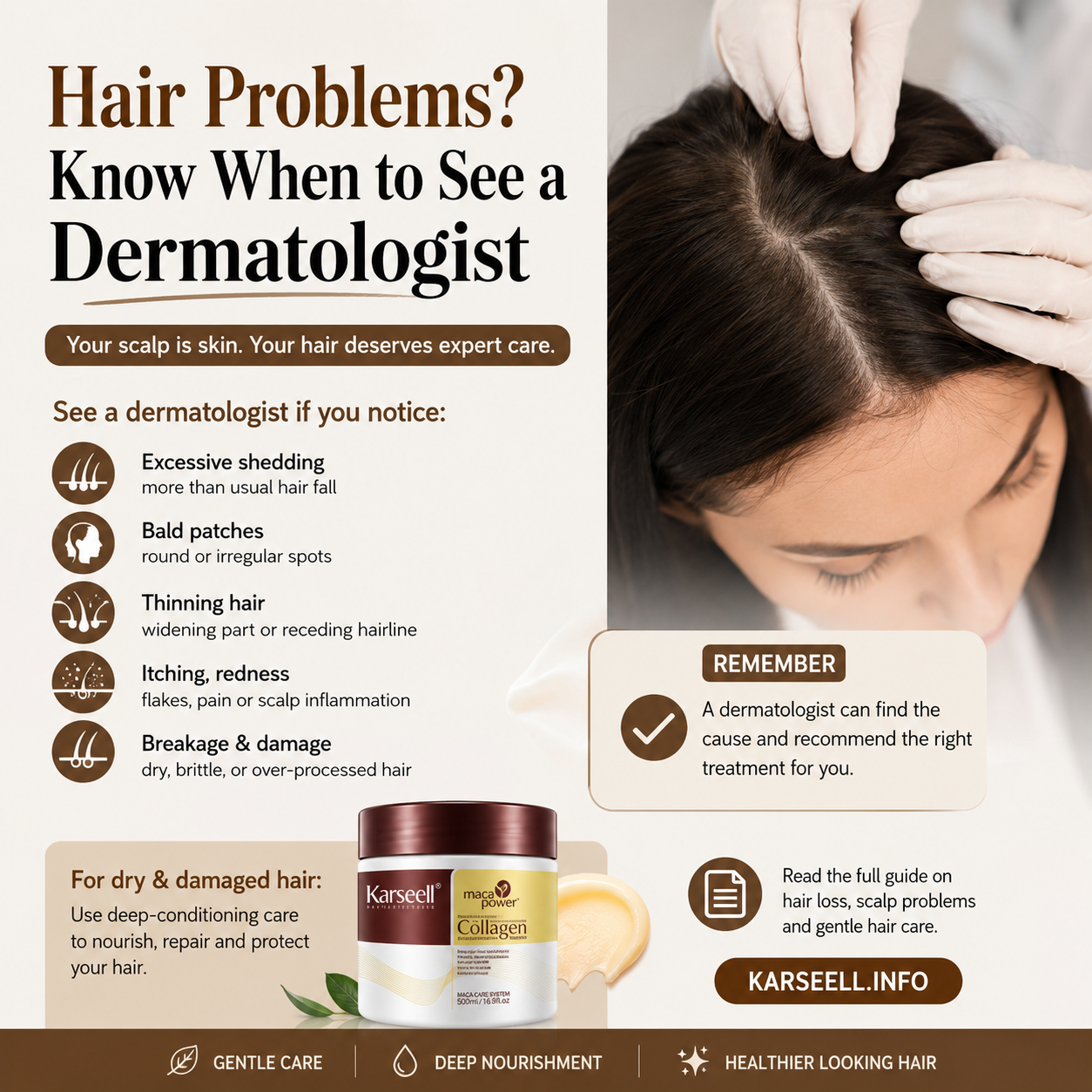
Hair problems can be frustrating, especially when you do not know whether you are experiencing normal shedding, cosmetic hair damage, or a medical condition affecting your scalp.
Dryness, frizz, split ends, and breakage can often be improved with a gentler hair care routine. However, sudden hair loss, bald patches, scalp inflammation, or persistent itching may require an examination by a dermatologist.
A dermatologist is a medical doctor who diagnoses and treats conditions affecting the skin, scalp, hair, and nails. Because hair loss can have many possible causes, getting the correct diagnosis is an important first step before beginning treatment.
What Kind of Doctor Treats Hair Problems?
The best doctor for persistent hair or scalp problems is usually a board-certified dermatologist, preferably one with experience treating hair loss and scalp disorders.
A dermatologist may help diagnose conditions such as:
- Female-pattern or male-pattern hair loss
- Alopecia areata
- Excessive hair shedding
- Scalp psoriasis
- Seborrheic dermatitis
- Scalp infections
- Folliculitis
- Traction alopecia
- Hair loss caused by inflammation or scarring
Some hair loss conditions look similar but require very different treatments. For example, female-pattern hair loss can resemble hair loss caused by hormonal changes, medical conditions, stress, medication, or nutritional problems. This is why the American Academy of Dermatology recommends receiving a professional diagnosis before treating suspected hair loss.
When Should You See a Dermatologist for Hair Problems?
Consider making an appointment when you notice a significant or unexplained change in your hair or scalp.
Sudden or Excessive Hair Shedding
Losing some hair every day is normal. The American Academy of Dermatology and the NHS state that many people naturally shed approximately 50 to 100 hairs per day. Losing significantly more than usual may be considered excessive hair shedding.
Speak with a healthcare professional when:
- Large amounts of hair come out during washing or brushing
- You regularly find clumps of hair on your pillow
- Your ponytail feels noticeably thinner
- Your scalp has become more visible
- The shedding continues for several weeks or months
Excessive shedding can sometimes occur after childbirth, major stress, illness, surgery, substantial weight loss, or another physical or emotional stressor. A dermatologist can help determine whether the problem is temporary shedding or another type of hair loss.
Round or Irregular Bald Patches
Smooth, round, or oval bald patches may be a sign of alopecia areata, an autoimmune form of hair loss. Some people may also experience itching, tingling, or a burning sensation before or around the affected area.
Do not try to diagnose bald patches using photos from social media. A dermatologist can examine the scalp and determine whether the patches are related to alopecia areata, an infection, traction, or another condition.
A Receding Hairline or Widening Part
Gradual thinning at the crown, temples, hairline, or center part may be associated with pattern hair loss.
Early evaluation is important because many hair loss treatments tend to produce better results when the cause is identified and addressed early.
Redness, Pain, Crusting, or Scalp Sores
Make an appointment when hair loss is accompanied by:
- Scalp pain or tenderness
- Redness or swelling
- Thick scales or crusts
- Open sores
- Blisters
- Pus or fluid
- Persistent burning or itching
Scaly bald patches with sores or pus can sometimes indicate a fungal infection, while redness and inflamed sores may be associated with another scalp disorder. These symptoms should be medically assessed rather than treated only with cosmetic hair products.
Severe or Persistent Dandruff
Mild dandruff can often be managed with an appropriate anti-dandruff shampoo. However, the NHS recommends contacting a healthcare professional when symptoms remain after approximately one month of anti-dandruff shampoo use, or when the scalp becomes very itchy, red, or swollen.
Persistent flakes may be related to seborrheic dermatitis, psoriasis, eczema, irritation, or another scalp condition.
Hair Loss That Affects Your Wellbeing
Hair loss can affect confidence, emotional wellbeing, and quality of life. You do not need to wait until the problem becomes severe before asking for help.
Speak openly with your dermatologist about how hair loss is affecting you. The NHS recommends discussing both the possible cause and available treatment options with a healthcare professional.
Dermatologist or Trichologist: What Is the Difference?
A dermatologist is a licensed medical doctor who can diagnose diseases, request medical tests, perform a scalp biopsy, and prescribe medication when appropriate.
A trichologist focuses on hair and scalp care, but qualifications and the services offered can vary depending on the country or region. A trichologist may provide useful cosmetic hair care guidance, but they do not replace a dermatologist when a medical condition is suspected.
For sudden hair loss, bald patches, scalp pain, sores, inflammation, or possible infection, begin with a doctor or dermatologist.
What Happens During a Hair-Loss Appointment?
Your dermatologist will normally ask questions about:
- When the problem started
- Whether the shedding was sudden or gradual
- Recent illness, stress, pregnancy, or weight changes
- Current medications and supplements
- Family history of hair loss
- Hair styling and chemical-treatment habits
- Symptoms such as itching, pain, scales, or burning
The dermatologist may then examine your scalp, hairline, hair density, and individual hair shafts.
Depending on the symptoms, the evaluation may include:
A Hair-Pull Test
The doctor may gently pull a small section of hair to evaluate active shedding.
Blood Tests
Blood testing may be recommended when the dermatologist suspects that a medical condition, hormonal issue, or nutritional deficiency could be contributing to the hair loss.
Scalp Examination
The dermatologist may use magnification or specialized imaging to examine the scalp and hair follicles more closely.
Scalp Biopsy
In some cases, a small scalp sample may be examined to help identify inflammation, infection, or a scarring form of hair loss.
Not every patient needs every test. The evaluation depends on the pattern of hair loss, medical history, and scalp symptoms.
How to Prepare for Your Dermatology Appointment
A little preparation can help your dermatologist understand the problem more accurately.
Before the appointment:
- Take clear photos of your hairline, part, crown, and affected areas.
- Write down when you first noticed the problem.
- List your medications, vitamins, and supplements.
- Mention recent illness, pregnancy, stress, surgery, or dietary changes.
- Bring a list of hair products and chemical treatments you regularly use.
- Explain how often you use heat styling, bleach, relaxers, extensions, or tight hairstyles.
- Avoid hiding the affected area with hair fibers or heavy styling products on the appointment day.
You can also prepare questions such as:
- What type of hair loss do I have?
- Is it temporary or progressive?
- Could a medical condition be contributing?
- Do I need blood tests or a scalp biopsy?
- What treatments are appropriate for me?
- When should I expect to see improvement?
- Which hair care practices should I avoid?
Hair Breakage or Hair Loss: How Can You Tell?
Hair breakage happens when the hair shaft snaps. It may be caused by dryness, heat, bleaching, chemical processing, aggressive brushing, or excessive tension.
Signs of breakage can include:
- Short pieces of broken hair
- Split ends
- Uneven lengths
- Rough or brittle strands
- White dots near damaged ends
- Breakage concentrated around chemically treated areas
Hair loss occurs when the strand sheds from the follicle. You may notice full-length hairs with a small bulb at one end, thinning around the scalp, or a change in hair density.
It is possible to experience both breakage and hair loss at the same time. When you are unsure, a dermatologist can help identify whether the problem is happening along the hair shaft, at the root, or both.
Can a Hair Mask Treat Hair Loss?
A cosmetic hair mask cannot diagnose or treat alopecia, hormonal hair loss, an infection, or an inflammatory scalp disease.
Hair masks are designed primarily to condition the hair shaft. A good moisturizing routine may help dry, processed, or damaged hair feel:
- Softer
- Smoother
- More manageable
- Less tangled
- Less prone to friction-related breakage
However, cosmetic improvement should not be confused with medical hair regrowth.
A product such as the Karseell Collagen Hair Mask can be included in a routine for dry or damaged lengths, but it should not replace professional care when you are experiencing unexplained thinning, bald patches, scalp sores, or excessive shedding.
A Gentle Routine for Dry and Breakage-Prone Hair
While waiting for professional guidance, treat fragile hair gently.
Use a Mild Shampoo
Concentrate shampoo mainly on the scalp instead of aggressively rubbing the lengths.
Apply Conditioner After Shampooing
Conditioner reduces friction and helps make the hair easier to detangle.
Use a Deep-Conditioning Mask
Apply a moisturizing mask to the mid-lengths and ends according to the product instructions. Avoid applying a cosmetic mask directly to an irritated or infected scalp unless a healthcare professional confirms that it is appropriate.
Detangle Carefully
Use a wide-tooth comb and begin at the ends before gradually moving upward.
Reduce Excessive Heat
Frequent high-temperature styling can weaken already fragile hair. Use lower temperatures and avoid repeatedly passing a tool over the same section.
Limit Tight Hairstyles
Tight braids, ponytails, extensions, or buns can place continuous tension on the hairline. Persistent pulling may contribute to traction-related hair loss.
The American Academy of Dermatology advises seeking professional evaluation when changes to hair care do not improve the problem, particularly when thinning or hair loss is present.
How to Find a Dermatologist Specializing in Hair Loss
When searching online, use terms such as:
- Dermatologist for hair loss near me
- Hair-loss dermatologist
- Alopecia dermatologist
- Scalp specialist dermatologist
- Female hair-loss dermatologist
- Dermatologist for thinning hair
- Dermatologist for scalp problems
Before booking, ask the clinic:
- Does the dermatologist treat hair-loss conditions?
- Do I need a medical referral?
- Is the appointment covered by insurance?
- What is the consultation fee?
- Does the clinic perform scalp biopsies or hair-loss testing?
- How long is the waiting period?
Choose a qualified medical clinic rather than selecting a provider only because of dramatic before-and-after advertising.
Frequently Asked Questions
Should I see a dermatologist for hair loss?
Yes, especially when the hair loss is sudden, persistent, unexplained, affecting your confidence, or accompanied by scalp symptoms. Early diagnosis may improve the chance of controlling certain types of hair loss.
Can a dermatologist make my hair grow back?
That depends on the cause. Some conditions can improve with treatment, while others may be progressive or permanent. A dermatologist can provide a diagnosis and explain realistic treatment expectations.
When is hair shedding considered excessive?
Losing approximately 50 to 100 hairs per day can be normal. A noticeable increase beyond your usual shedding pattern, particularly when it continues, should be discussed with a healthcare professional.
Can stress cause hair shedding?
Major physical or emotional stress may trigger excessive shedding in some people. Because several conditions can produce similar symptoms, persistent shedding should still be professionally evaluated.
What should I bring to a hair-loss appointment?
Bring photos showing how the problem has changed, your medication and supplement list, information about recent health events, and details about your normal hair care routine.
Should I use a hair mask if my scalp is irritated?
Avoid placing cosmetic products on a painful, inflamed, broken, or infected scalp until you receive appropriate medical advice. A conditioning mask can generally be reserved for the hair lengths and ends.
Can damaged hair cause baldness?
Damage to the hair shaft usually causes breakage rather than hair loss from the follicle. However, repeated tension, severe chemical damage, or scalp inflammation may contribute to more serious problems. A dermatologist can help distinguish breakage from true hair loss.
Final Thoughts
Not every bad hair day requires a medical appointment. Dryness, frizz, tangles, and cosmetic damage may improve with gentle cleansing, regular conditioning, less heat, and a moisturizing hair mask.
However, sudden shedding, visible thinning, bald patches, scalp pain, persistent itching, sores, crusting, or inflammation should not be ignored.
A dermatologist can identify the cause of the problem and recommend an appropriate treatment plan. Once medical conditions have been addressed, a gentle hair care routine can help protect the remaining hair and improve the appearance and manageability of dry or damaged strands.
For more hair care guidance, explore the routines, product guides, and damaged-hair resources available on Karseell.info.