



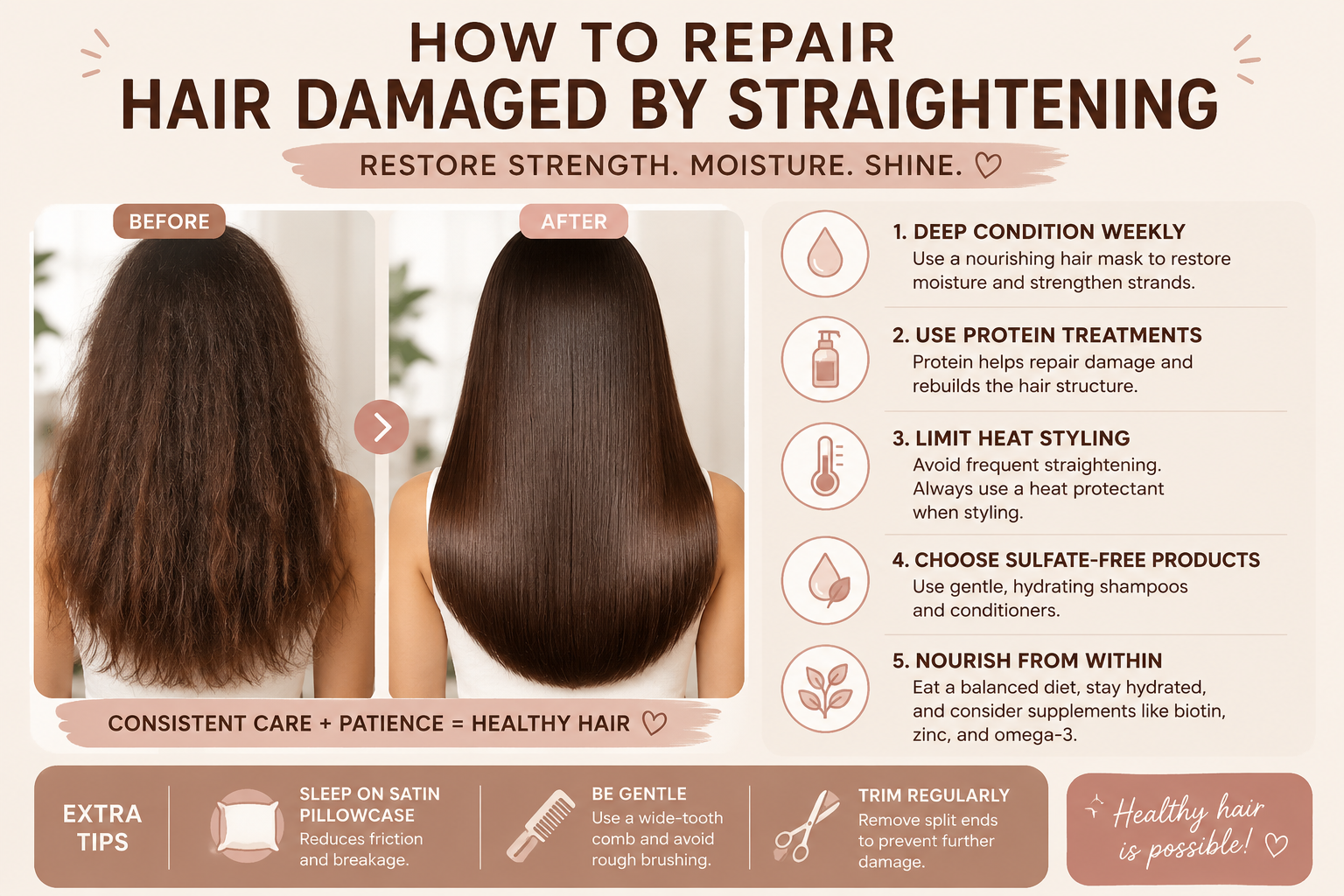
Heat straightening tools like flat irons, blow dryers, and hot combs have become essential in modern hair styling routines. Many people use them daily to achieve smooth, shiny, and straight hair. However, over time, excessive heat leads to one of the most common hair problems in the world: heat-damaged hair caused by straightening.
In countries like Canada, where dry winters and indoor heating already weaken hair, the damage becomes even more severe. Hair becomes dry, brittle, frizzy, and loses its natural shine and elasticity.
The good news is that even severely damaged hair can be improved with the right routine, products, and consistency. This guide will show you exactly how to repair hair damaged by straightening step by step, using professional methods and SEO-proven hair care strategies used in salons.
🧠 What Happens When You Straighten Hair Too Often?
To repair damaged hair, you must first understand the science behind the damage.
Hair is made of keratin protein and protected by a cuticle layer. When exposed to high heat (usually above 180°C), three major things happen:
1. Moisture Evaporation
Heat removes water from inside the hair shaft, making hair dry and weak.
2. Protein Breakdown
Keratin fibers start to weaken, causing structural damage.
3. Cuticle Lifting
The outer layer of hair opens up, leading to frizz and breakage.
Over time, repeated straightening causes irreversible visible damage:
- Split ends
- Rough texture
- Weak strands
- Frizz even after styling
- Hair thinning appearance
- Loss of shine
This is known as heat damage accumulation, and it worsens if no treatment is applied.
🌍 Why Heat Damage Is So Common in Canada and Worldwide
In modern beauty routines, heat styling is used almost daily. In places like Canada and the United States, the problem is more intense due to:
- Cold, dry air in winter
- Indoor heating systems
- Frequent styling for professional looks
- Chemical treatments + heat combination
- Social media beauty trends
These factors create a perfect environment for hair dehydration and damage.
🚨 Signs Your Hair Is Damaged by Straightening
You may not realize your hair is damaged until it becomes severe. Here are the most common signs:
Physical Signs:
- Split ends spreading upward
- Hair breaks easily when brushing
- Dry and rough texture
- Lack of elasticity (hair stretches and breaks)
Visual Signs:
- Dull and lifeless appearance
- Frizz even after styling
- Uneven hair strands
- Thin-looking ends
Touch Signs:
- Hair feels rough instead of soft
- Tangles easily
- Feels “crispy” or burned
If you notice 3 or more signs, your hair needs immediate repair treatment.
🔬 Can Heat-Damaged Hair Be Fully Repaired?
This is an important SEO question many users search for.
Hair is made of dead keratin cells, which means it cannot regenerate like skin. However:
👉 You CAN repair the appearance and structure of damaged hair
👉 You CANNOT fully restore destroyed hair fibers
What treatments can do:
- Restore softness
- Improve shine
- Reduce breakage
- Smooth cuticle layer
- Strengthen remaining fibers
- Make hair look healthy again
Consistency is what determines results.
🛠️ Step-by-Step Guide: How to Repair Hair Damaged by Straightening
Step 1: Stop or Reduce Heat Styling Immediately
The first step is damage control.
- Avoid daily straightening
- Limit heat use to 1–2 times per week
- Use the lowest temperature possible
- Let hair air-dry when possible
Without reducing heat, no treatment will work effectively.
Step 2: Use a Professional Repair Hair Mask
Deep conditioning is the most important step in hair recovery , If you’re looking for the best treatment options, read our guide on Best Hair Mask for Damaged Hair in Canada to discover the most effective ingredients for repairing dry and brittle hair.
Karseell Hair Care Solutions provides salon-grade formulas designed for heat-damaged and chemically treated hair , You can also read our Karseell Collagen Hair Mask Review to learn how collagen-based treatments help improve softness, hydration, and shine.
What a good hair mask does:
- Rebuilds moisture balance
- Repairs cuticle damage
- Reduces breakage
- Smooths frizz
- Improves shine
Best ingredients to look for:
- Collagen
- Keratin
- Argan oil
- Coconut oil
- Shea butter
- Vitamin E
How to use:
- Apply 2–3 times per week (severe damage)
- Leave 10–20 minutes
- Use heat cap for deeper penetration
- Rinse with cool water
Step 3: Switch to Sulfate-Free Shampoo
Most commercial shampoos contain sulfates that strip natural oils.
Benefits of sulfate-free shampoo:
- Preserves moisture
- Reduces dryness
- Protects color-treated hair
- Prevents further breakage
This is essential for long-term recovery.
Step 4: Add Heat Protectant Before Styling
Heat protectant is non-negotiable if you still use straighteners.
It works by:
- Creating a protective barrier
- Reducing moisture loss
- Minimizing protein breakdown
- Lowering direct heat impact
Apply evenly before blow-drying or straightening.
Step 5: Trim Damaged Ends Regularly
Once ends are split, they cannot be repaired.
Recommended schedule:
- Every 6–8 weeks
This helps:
- Prevent damage spreading
- Improve hair appearance
- Promote healthier growth
Step 6: Use Natural Oils for Deep Nourishment
Natural oils are essential for sealing moisture.
Best options:
- Argan oil (shine + softness)
- Coconut oil (protein protection)
- Jojoba oil (scalp balance)
Apply small amounts on ends after washing.
Step 7: Reduce Washing Frequency
Over-washing removes natural protective oils.
Ideal routine:
- 2–3 washes per week
- Lukewarm water
- Cold rinse at the end
This helps hair retain hydration longer.
Step 8: Sleep Protection Routine
Night care is often ignored but very important.
- Use silk or satin pillowcases
- Tie hair loosely
- Apply light oil before sleeping
This reduces friction and breakage.
🧴 Best Products for Heat Damaged Hair Recovery
When choosing products, prioritize repair-focused formulas:
- Collagen hair masks
- Keratin treatments
- Moisturizing conditioners
- Leave-in repair serums
- Protein treatments
These help rebuild visible strength over time.
📈 Hair Recovery Timeline (Realistic Expectations)
Recovery depends on damage level:
Mild damage:
2–4 weeks
Moderate damage:
1–3 months
Severe damage:
3–6 months
Consistency matters more than expensive products.
💡 Expert Tips to Speed Up Hair Repair
- Avoid bleaching during recovery
- Drink enough water daily
- Eat protein-rich foods
- Reduce chemical treatments
- Use microfiber towels
- Avoid brushing wet hair aggressively
🌿 Natural vs Professional Hair Repair
Natural remedies help, but professional treatments are faster and more effective.
Natural methods:
- Oils
- Aloe vera
- DIY masks
Professional methods:
- Collagen treatments
- Keratin masks
- Salon-grade repair systems
Best results come from combining both.
🏁 Final Conclusion
Heat styling damage is one of the most common hair problems worldwide, especially in regions like Canada. However, with the right strategy, it is possible to restore softness, shine, and strength.
The key steps are:
- Stop excessive heat use
- Use deep repair hair masks
- Apply heat protection
- Trim damaged ends
- Follow a consistent routine
For advanced repair solutions designed specifically for damaged and treated hair, explore professional products at Karseell.
Healthy hair is not about one treatment—it is about consistency, protection, and the right care system , If you still use flat irons regularly, don’t miss our guide on Does Straightening Your Hair Damage It in Canada to learn how to prevent future heat damage.