



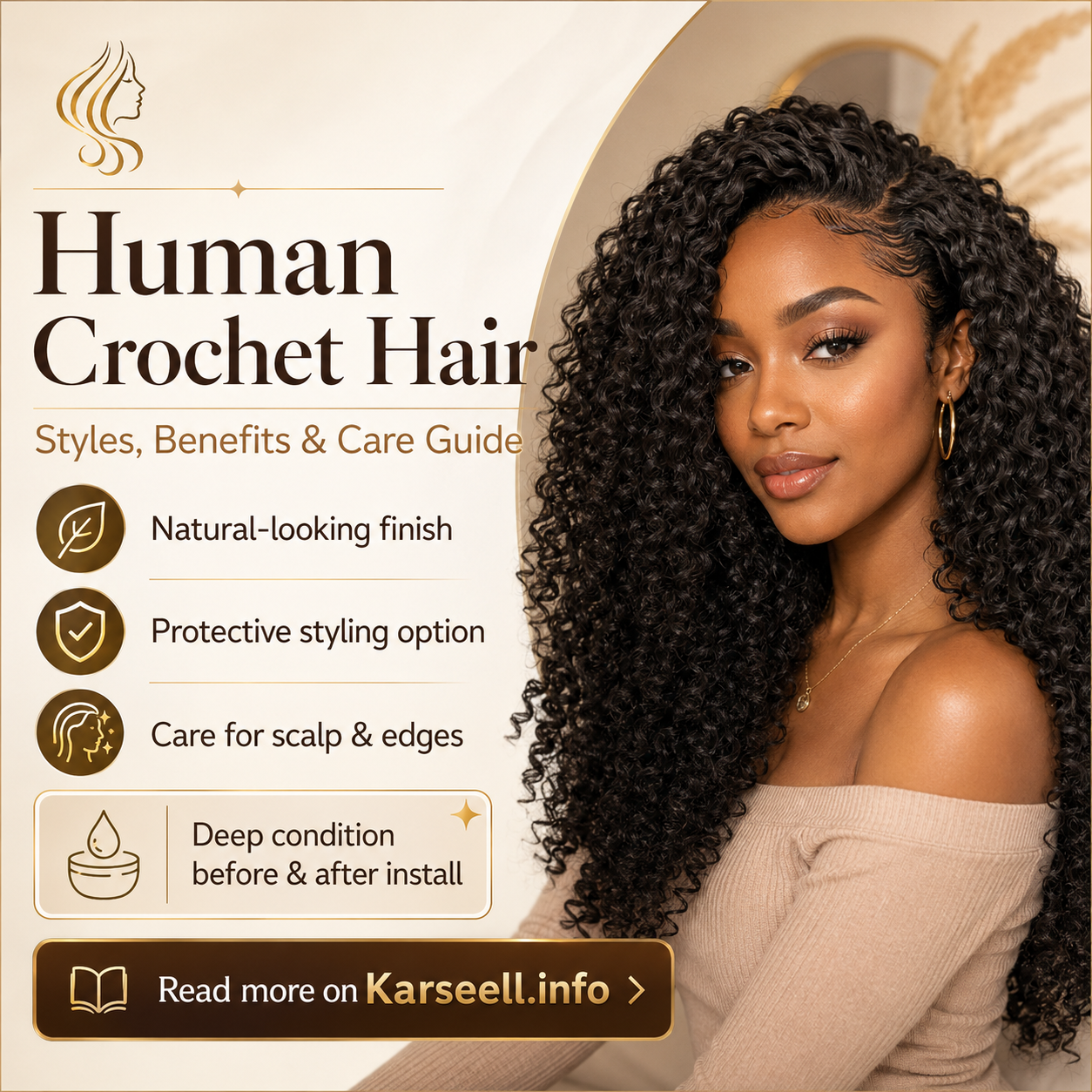
Human crochet hair has become a popular option for anyone who wants a natural-looking protective hairstyle with movement, softness, and styling flexibility.
Unlike traditional synthetic crochet hair, human crochet hair is made from real human hair. It can create realistic curls, waves, twists, braids, and bohemian styles while helping reduce the amount of daily manipulation applied to your natural hair.
However, the quality of the final result depends on the hair you choose, the installation method, and how carefully you maintain your scalp and natural hair underneath.
This complete guide explains what human crochet hair is, how it is installed, how long it lasts, and how to protect your natural hair before, during, and after wearing the style.
What Is Human Crochet Hair?
Human crochet hair refers to real human hair extensions installed using a crochet or latch-hook method.
The natural hair is usually braided into cornrows. A stylist then uses a crochet hook to pull small sections of extension hair through the cornrow base and secure them.
Crochet braids can be created with synthetic or human hair. Human hair is generally chosen when the wearer wants a softer texture, more natural movement, easier blending, and greater styling flexibility.
Popular human crochet hair textures include:
- Deep wave
- Water wave
- Loose wave
- Kinky curly
- Afro curly
- Body wave
- Straight human hair
- Bohemian curls
- Natural-textured curls
The texture you choose should complement your desired style, lifestyle, and normal hair-care routine.
Human Hair Crochet Braids vs. Synthetic Crochet Hair
Both human and synthetic crochet hair can create attractive protective styles, but they offer different benefits.
Human Crochet Hair
Human hair usually provides:
- More natural movement
- A softer texture
- Better blending with natural hair
- Greater styling versatility
- The possibility of using controlled heat, when permitted by the manufacturer
- A more realistic finish
Because it is real hair, human crochet hair normally requires regular detangling, hydration, and nighttime protection.
Synthetic Crochet Hair
Synthetic hair usually provides:
- A more affordable price
- Easier access in beauty-supply stores
- Pre-styled curls, braids, twists, or locs
- Less daily styling
- Better shape retention for certain braided styles
Synthetic fibers may not tolerate heat unless the packaging specifically says they are heat-safe.
Human hair tends to look and move more naturally, while synthetic hair may be easier for people seeking a budget-friendly, low-maintenance style.
Benefits of Human Crochet Hair
Natural-Looking Results
One of the biggest benefits of human crochet hair is its realistic appearance.
High-quality human hair can move, separate, and respond to styling more like naturally growing hair. It can also blend more easily with leave-out hair or individual braids around the hairline.
Styling Versatility
Depending on the hair quality and manufacturer’s instructions, human crochet hair may be styled in several ways.
You may be able to:
- Create different parts
- Wear the hair up or down
- Refresh the curls
- Use rollers or flexi-rods
- Create ponytails or buns
- Carefully use approved heat tools
- Change from defined curls to a softer look
Always check whether the extensions are suitable for heat before using a flat iron, curling iron, or blow-dryer.
Reduced Daily Manipulation
Once installed, crochet hair can reduce the need to brush, comb, straighten, or restyle your natural hair every morning.
This can help minimize daily handling, but a protective style only remains protective when it is installed without excessive tension and maintained correctly.
Access to the Scalp
Crochet installations are normally attached to a cornrow base, which may leave parts of the scalp accessible.
This can make it easier to clean the scalp, apply a lightweight moisturizer, and monitor for itching, redness, or excessive tension.
Is Human Crochet Hair Good for Natural Hair?
Human crochet hair can be a useful protective style, but it does not automatically protect your hair.
The braids should not feel painful, excessively tight, or heavy. Tight braids and extensions can continuously pull on the follicles and contribute to a form of hair loss called traction alopecia.
A healthy installation should:
- Feel secure without causing pain
- Avoid excessive tension around the edges
- Use an appropriate amount of extension hair
- Allow access to the scalp
- Protect the natural hair without pulling it
- Be removed when the natural hair becomes heavily tangled or overgrown
According to the American Academy of Dermatology, pain during braiding or extension installation is a warning sign. If a hairstyle hurts, ask the stylist to loosen or redo it.
How to Prepare Your Natural Hair
Preparing your natural hair correctly can help reduce dryness, buildup, and breakage during the installation.
Clean Your Scalp
Begin with a clean scalp and freshly washed hair.
Use a gentle shampoo to remove:
- Sweat
- Oil
- Styling products
- Flakes
- Dirt and buildup
Avoid installing crochet hair over a scalp that is already inflamed, painful, or experiencing an unexplained condition.
Deep Condition Your Hair
Natural hair will remain braided underneath the crochet style, so it should be properly conditioned before installation.
A deep-conditioning treatment can help improve softness, manageability, and moisture retention.
For dry or damaged natural hair, explore this guide to the best hair masks for damaged hair in the USA and Canada.
Apply the treatment to the natural hair, follow the product directions, and rinse thoroughly before braiding.
Detangle Carefully
Detangle the hair in sections using your fingers or a wide-tooth comb.
Begin at the ends and gradually move toward the roots. Avoid pulling aggressively through knots because this can cause unnecessary breakage before the installation even begins.
Dry the Hair Completely
Make sure the natural hair and cornrow base are completely dry before installing the extensions.
Hair that remains damp underneath a long-term protective style may develop odor, buildup, or scalp discomfort.
How Human Crochet Hair Is Installed
The exact technique can vary depending on the desired look.
Step 1: Create the Cornrow Base
The natural hair is braided into cornrows.
The braid pattern will depend on:
- The desired part
- The density of the finished style
- Whether the front will have individual braids
- Whether the style needs versatile parting
- The amount of natural hair being covered
The cornrows should be flat and secure, but not painful.
Step 2: Prepare the Human Hair
The stylist separates the human hair into small sections.
Using sections that are too large can create bulky knots, excessive weight, or an unnatural-looking finish.
Step 3: Insert the Crochet Hook
The closed crochet hook is carefully inserted underneath a cornrow.
The hook is opened, a section of extension hair is attached, and the hook is then closed.
Step 4: Pull the Hair Through
The extension hair is gently pulled underneath the cornrow.
Depending on the technique, the stylist may create a loop or knot to secure the hair.
Step 5: Shape and Blend the Style
Once the installation is complete, the stylist may trim, shape, separate, or blend the curls.
Additional pieces may be installed around the hairline or part to create a more natural-looking finish.
Popular Human Crochet Hair Styles
Human Hair Crochet Curls
Curly crochet styles provide volume, movement, and a natural finish.
Popular textures include water wave, deep wave, kinky curly, and loose curl.
Bohemian Crochet Braids
Bohemian crochet braids combine braided sections with loose human-hair curls.
The loose pieces create a soft, effortless look, but they generally require more detangling and hydration than fully braided extensions.
Human Hair Crochet Bob
A crochet bob is a shorter, lightweight option that may be easier to maintain.
It can be worn curly, wavy, layered, or with a side part.
Kinky Curly Crochet Hair
Kinky curly human hair can blend well with coily or tightly curled natural textures.
It is a good option for creating volume while maintaining a natural-looking texture.
Straight Human Crochet Hair
Straight human hair can be used for sleek crochet styles.
However, straight textures may show knots or the cornrow base more easily, so the installation technique and parting pattern are especially important.
Crochet Passion Twists
Passion twists combine twisted sections with a soft, textured finish.
Human hair may be added to create loose curls or bohemian pieces throughout the style.
How Long Does Human Crochet Hair Last?
A human crochet hair installation may last approximately four to six weeks, depending on:
- The installation technique
- Hair quality
- Scalp condition
- Natural hair growth
- Daily maintenance
- Product buildup
- The amount of tension
- How the hair is protected at night
Some crochet hairstyles may remain wearable for around one month to one and a half months. However, keeping an installation longer does not always mean it is healthier for the natural hair.
Remove the style earlier when you experience:
- Persistent itching
- Pain or tenderness
- Excessive buildup
- Matting near the roots
- Strong odor
- Loose or exposed cornrows
- Significant tangling
- Redness or scalp sores
- Pulling around the hairline
How to Care for Human Crochet Hair
Protect It at Night
Before sleeping, loosely separate the hair into sections.
Cover it with a satin or silk bonnet, or sleep on a satin pillowcase. This can reduce friction, tangling, and dryness.
For longer styles, try a loose pineapple or several large twists before covering the hair.
Detangle Gently
Human crochet hair can tangle because it behaves more like real hair.
To detangle:
- Separate the hair into sections.
- Hold the hair above the tangled area.
- Begin at the ends.
- Use your fingers or a wide-tooth comb.
- Work upward slowly.
- Avoid pulling directly against the crochet knots.
Do not aggressively brush curly crochet hair when it is dry.
Use Lightweight Products
Heavy oils, butters, and thick creams can cause buildup around the crochet knots and cornrow base.
Choose lightweight products appropriate for the extension texture.
A small amount of leave-in conditioner or curl refresher may help human hair extensions feel softer and easier to detangle. Leave-in conditioner can also help reduce frizz and improve manageability.
Avoid Excessive Heat
Even when human hair can tolerate heat, frequent high temperatures may cause dryness and damage.
Use the lowest effective temperature and apply heat only when permitted by the hair manufacturer.
Keep hot tools away from the natural hair, crochet knots, and scalp.
Can You Wash Human Crochet Hair?
Yes, but the hair and scalp should be washed gently.
How to Wash the Scalp
Dilute a small amount of shampoo with water in an applicator bottle.
Apply it carefully between the cornrows and massage the scalp with your fingertips. Do not scratch the scalp with your nails.
Rinse carefully without aggressively rubbing or tangling the extensions.
How to Wash the Human Hair Extensions
Allow the shampoo and water to move downward through the hair.
Avoid gathering all the extensions on top of the head or rubbing them together.
Apply a lightweight conditioner to the lengths when needed, but avoid placing excessive conditioner directly onto the crochet knots or cornrow base.
Dry the Hair Completely
Gently squeeze out excess water with a microfiber towel.
Allow the hair and braided base to dry completely. A hooded dryer may be useful when used at a comfortable temperature.
Never sleep while the cornrow base is still wet.
How to Moisturize Your Natural Hair Under Crochet Braids
Your natural hair may still need moisture while it is braided underneath the extensions.
Use a lightweight water-based moisturizing spray and apply it carefully between the cornrows.
Avoid saturating the scalp every day, as excessive product can cause buildup.
Focus on:
- Keeping the scalp clean
- Using lightweight moisture
- Avoiding heavy daily oils
- Monitoring the edges
- Preventing the cornrow base from staying wet
How to Remove Human Crochet Hair Safely
Improper removal can undo the benefits of a protective style.
Cut Only the Extensions
Carefully identify where the natural hair ends before cutting any extension hair.
Never cut close to the cornrow base when you cannot clearly distinguish the extension from your natural hair.
Release the Crochet Knots
Loosen or cut the crochet loops, then gently pull the extension hair away from the cornrow.
Unbraid Slowly
Once all the extension hair has been removed, take down each cornrow carefully.
Use your fingers to separate shed hair before using a comb.
Detangle Before Shampooing
Hair naturally sheds every day. Shed strands can remain trapped inside the braids, so seeing loose hair during removal does not automatically mean the style caused hair loss.
Apply a detangling product and carefully remove knots before shampooing.
Deep Condition After Removal
After cleansing, use a moisturizing treatment to restore softness and manageability.
Read the guide to the best hair mask for dry hair in Canada for product-selection and application tips.
You can also learn why Karseell Collagen is used for dry and damaged hair before adding it to your post-protective-style routine.
A cosmetic hair mask should be applied according to the product instructions and should not be used as a medical treatment for scalp disease or hair loss.
Common Human Crochet Hair Mistakes
Installing the Hair Too Tightly
A tight installation is not more secure or longer-lasting.
Pain, bumps, headaches, or tenderness can indicate excessive tension. Repeated pulling from tight braids or extensions can damage the hair and contribute to traction alopecia.
Using Too Much Hair
Installing too much extension hair can make the style heavy.
Excessive weight may pull on the natural hair, especially around the temples, edges, and nape.
Ignoring the Natural Hair
The extensions may look beautiful while the natural hair underneath becomes dry, tangled, or covered in buildup.
Continue caring for your scalp and natural hair throughout the installation.
Applying Too Much Product
Using heavy creams, oils, gels, and mousse every day may create buildup and make human crochet hair look dull or greasy.
Start with a small amount and add more only when necessary.
Keeping the Style Too Long
Leaving crochet hair installed for too long can lead to matting, buildup, tangling, and difficulty during removal.
Give your natural hair and scalp time to rest between installations.
When Should You Avoid Crochet Hair?
Consider delaying the installation when you have:
- Active scalp sores
- Unexplained bald patches
- Severe itching or inflammation
- Significant edge thinning
- A painful or infected scalp
- Excessive hair shedding
- Recently damaged or broken hair
- A medical condition affecting the scalp
A dermatologist should evaluate persistent scalp inflammation, bald patches, unexplained thinning, or painful hair loss.
Frequently Asked Questions
Is human crochet hair better than synthetic hair?
Human crochet hair usually offers more natural movement, softness, blending, and styling versatility. Synthetic crochet hair is generally more affordable and may hold pre-set styles more easily. The best choice depends on your budget, desired look, maintenance routine, and scalp sensitivity.
Can human crochet hair be reused?
Some high-quality human hair may be reusable when it is removed carefully, cleaned properly, detangled, dried, and stored correctly.
However, reuse depends on the hair quality, installation method, shedding, tangling, and condition after removal.
Can you curl or straighten human crochet hair?
Many human hair extensions can be curled or straightened, but you should always check the manufacturer’s instructions first.
Use a heat protectant and the lowest effective temperature.
Does crochet hair damage your edges?
Crochet hair may damage the edges when the cornrows are too tight, the installation is too heavy, or the style repeatedly pulls on the hairline.
The style should not cause pain, bumps, or continuous tension.
Can human crochet hair get wet?
Yes. Human crochet hair can generally get wet, but the hair and cornrow base should be dried completely afterward.
How often should human crochet hair be washed?
There is no single washing schedule that works for everyone.
Wash when the scalp becomes sweaty, oily, itchy, or covered in buildup. Use a gentle technique that cleans the scalp without matting the extensions.
Can I use a hair mask while wearing crochet hair?
Avoid applying a thick hair mask directly over the crochet knots and cornrow base because it may be difficult to rinse completely.
For best results, deep condition your natural hair before installation and again after removal. Explore these salon-quality hair treatments available in Canada for additional routine ideas.
Is human crochet hair a protective style?
It can function as a protective style when installed loosely, maintained properly, and removed carefully.
However, no hairstyle is protective when it causes pain, excessive tension, scalp inflammation, or breakage.
Final Thoughts
Human crochet hair is a versatile choice for creating curls, waves, bohemian braids, natural-textured styles, and lightweight protective looks.
Human hair provides realistic movement and styling flexibility, but it also requires gentle detangling, hydration, scalp care, and nighttime protection.
For the healthiest results:
- Prepare and condition your natural hair before installation
- Avoid tight or heavy cornrows
- Keep the scalp clean
- Protect the style at night
- Remove the extensions carefully
- Deep condition the natural hair after removal
- Give the hair a break between installations
For more routines, product guides, and damaged-hair advice, visit Karseell.info.
SEO title: Human Crochet Hair: Styles, Benefits and Care Guide
Meta description: Discover human crochet hair styles, benefits, installation steps, maintenance tips, washing instructions, and how to protect your natural hair.
Suggested URL: human-crochet-hair-guide
Primary keyword: Human crochet hair
Secondary keywords:
- Human hair crochet braids
- Crochet human hair
- Best human hair for crochet braids
- Human crochet braids
- Human hair crochet styles
- How to maintain human crochet hair
Suggested categories:
- Hair Care Routine
- Protective Hairstyles
Suggested tags:
- Human Crochet Hair
- Crochet Braids
- Natural Hair
- Protective Styles
- Hair Extensions
Medical disclaimer: This article provides general hair-care information and does not replace advice, diagnosis, or treatment from a qualified healthcare professional.